I have voted for the left, right, front, back, I mean, whatever. I have voted for a lot of political parties over different periods of time. If you open one media channel, one political leader will be presented as God. If you open another media channel, he will be an asshole. Over time, this gets confusing. After seeing a lot of contradictions, it can make you feel that all of them are assholes. Well, you are not alone. They might be. But anyway, whom to vote for?
This got me wondering, and I started to question: what the hell is even a political party? They are organizations that provide services, more like companies such as Amazon, Walmart, or whatever. We citizens are their consumers. The price is charged in terms of taxes, and in return, they deliver services like infrastructure, welfare, excreta, excreta… They don’t provide shit for free. We are paying for it.
Why not consider them just like a company? As consumers, we only tend to care about two things: what are we paying, and what are we receiving in return? We don’t get obsessed over a company’s internal metrics like supply chains, KPIs, or whatever. We are not investors, as most people don’t save much. We are primarily consumers, then investors. Even if we are investors first and consumers second, most of us are shitty investors to judge anyway, as most retail investors/traders lose money.
But in general, we are good consumers. We don’t judge a product based on whether the CEO of a company is a philanthropist or not. We don’t give a damn about him. We judge based on outcomes like product quality, price, reliability, and convenience. If a service fails, we complain, switch providers, or demand better.
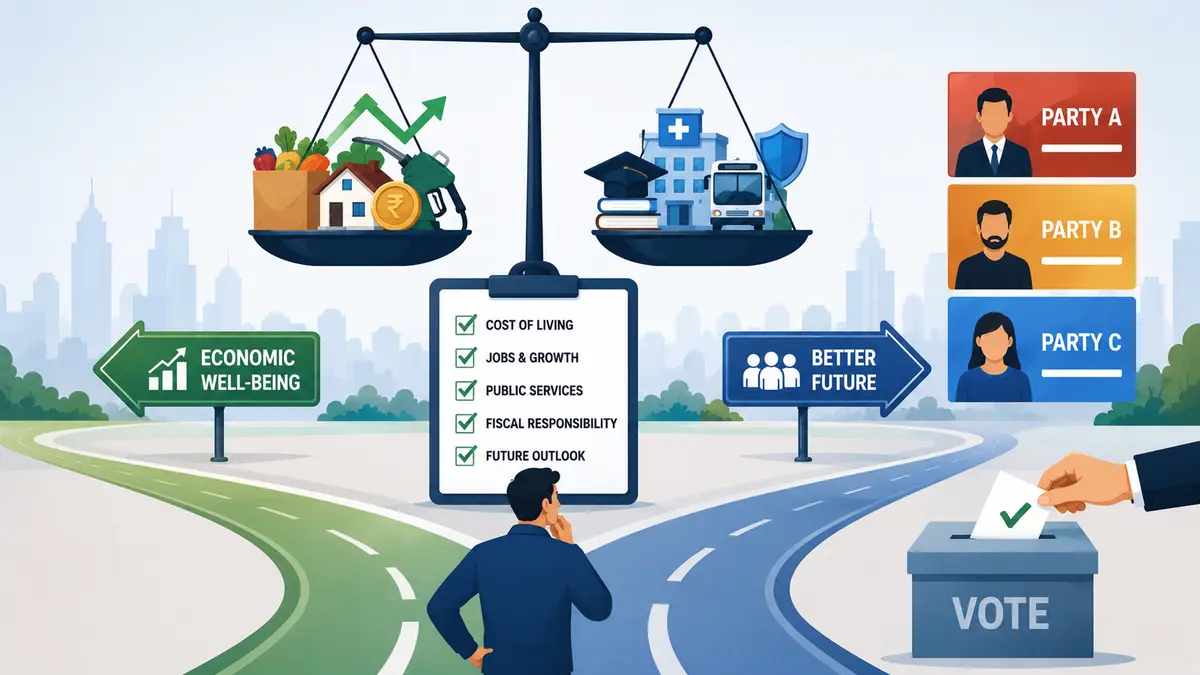
So why not vote just like that? Instead of caring about the background of the political head, media narratives, or ideological battles, evaluate based on your lived experience. Are public services improving? Is your cost of living manageable? Are basic amenities like water, healthcare, education, and pensions functioning effectively? These are tangible indicators of governance.
Companies go bankrupt when they fail to keep up with their competitors because there is real competition. If people vote just based on services, even if one party is highly corrupt, they need to be less corrupt than the other party to stay in the game.
Not all companies are liked by everyone. Even big companies have 1-star reviews, not necessarily because the product is bad. Sometimes the product might not be compatible with them, they got a damaged piece, or maybe got a bad customer service guy, or the customer is just a bitch. But anyway, the company that can satisfy most customers, not all customers, comes out on top.
Some mobile network service providers have the best quality in some regions but might have no signal in the region you live in. But a smaller service provider might have better signal in your region. Then you probably go for the other one, right? This satisfies your need. In the same way, in some parties, 8 out of 10 politicians may be corrupt, but the other 2 might come from your region, so you get the best services in your region. So, you can still vote for them. They might win at the state level but lose at the national level.
Don’t buy into the reasons of the government. Maybe it’s their fault or simply bad luck, but consumers don’t give a fuck. There are certain companies that are running at a loss, burning investors’ cash, and providing services for a way cheaper price. But as a consumer, I still complain like a bitch about how their prices are expensive. And it’s not bad; it’s a healthy consumer relationship.
Vote based on your needs, not others’. I once knew a friend who was an engineer who said he would vote for one particular party. When I heard it, it didn’t make sense to me. He is a bit wealthy, and he pays a lot of taxes, which were particularly introduced by the party he supports. I asked him why, and he told me that this party helps the poor farmers in the country. This fucker is no farmer. No one in his family is a farmer, but he says he votes for them. Don’t be like him. It is not selfish. He is also a part of the community, not just poor farmers. Let the numbers decide.
The only thing that people need to look out for is whether a party or parties are turning into a monopoly/oligopoly. Right now, a lot of political systems effectively act like an oligopoly. Monopoly completely destroys competition in business as well as in parties.
Anyway, that’s it. The entire article can be summarized in a single line: while voting, behave like a consumer, not like a shareholder, and look out for monopolies/oligopolies. If I am wrong, mention it in the comments. Happy to hear if I say something stupid.