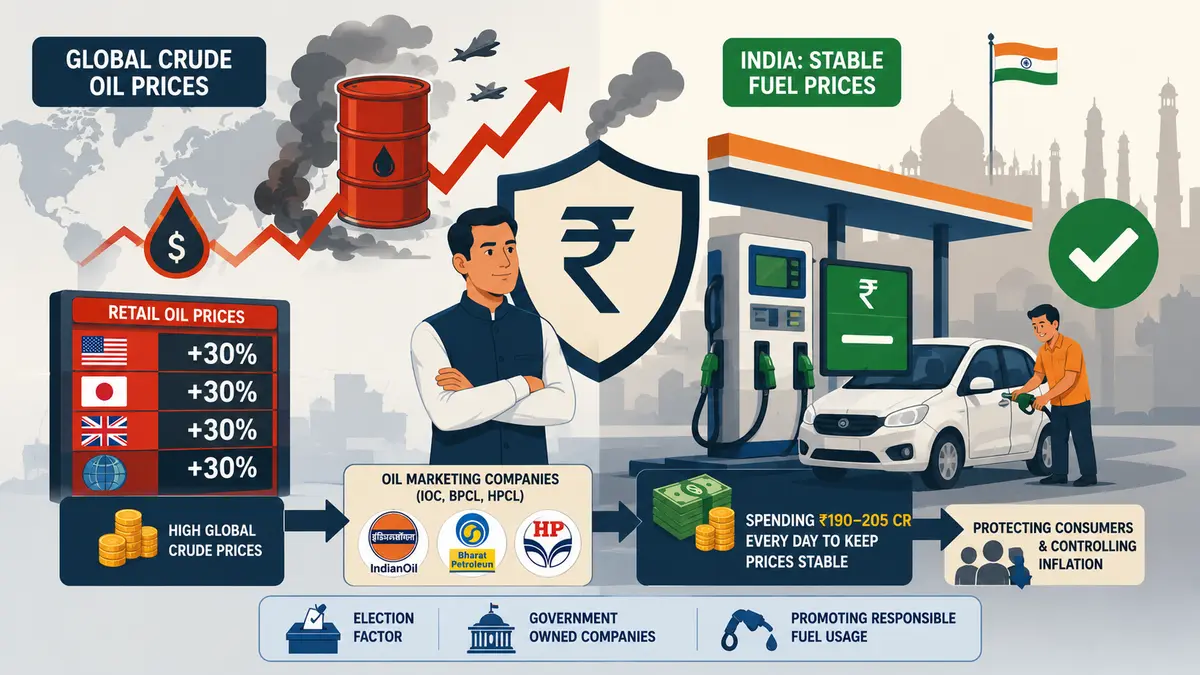
Ever since the start of the US-Israel and Iran war, oil prices have experienced a massive price surge. The Brent crude oil went from $74 to around $120, which is a massive 62% price jump. At the same time retail oil prices around the globe have increased by 30% in various different countries, including Japan and the UK. But in India the retail oil prices have been nearly unchanged. In this article we will see how India manages its crude oil prices and at what cost.
In India there are three major oil marketing companies (OMCs), such as Indian Oil Corporation (IOC), Bharat Petroleum (BPCL), and Hindustan Petroleum (HPCL), that control the vast majority of the retail fuel market in India. These three companies are primarily owned by the Indian government, which gives them significant influence over the retail oil prices, unlike in many countries where private companies dominate the energy market.
Reports suggest that currently these three companies are spending around 190-205 million dollars a day just to keep the oil prices stable for the retail. Even though crude oil prices are climbing around the globe, these companies are selling fuel at a loss just to keep the retail prices stable. The money they spend to keep the oil prices low is from their own reserves that have been set apart for building processing facilities and setting up distribution systems. Experts now are warning that if crude oil prices stay high for too long, these companies will struggle financially, which can lead them to borrow more money and rethink how to handle their spending.
Another important factor frequently discussed is the timing of ongoing state elections right now. Fuel prices will directly affect inflation and household expenses, making them politically sensitive during election periods. Governments often prefer to delay or soften fuel price increases during politically important periods in order to avoid public backlash and inflationary pressure.
While this current setup offers some temporary relief from the rising crude oil prices, its long-term impact still exists. The government has already started encouraging the citizens to control their usage by WFH, carpooling, or using public transport. The next few months will be critical for figuring out how India’s oil pricing game plan shifts in response to international market trends and local political pressures.